The fiddler of Kodihalli and other stories
Short stories by Sriram. Each story is around a thousand words. The creative commons pictures aren't mine. Feel free to comment on the stories you read. Suggest a different ending if you like :)
The Private Pact
Rock Solid Ltd. was in the real estate business - building houses (sorry, homes) for the burgeoning SEC-A consumer segment of India. Jatin Mehta, CEO of Rock Solid Ltd. was meeting with his marketing head, Piyush Mishra. Piyush was presenting his plan for the year. This was a year in which they planned to go public, marketing was critical. So far they had mainly focussed on selling dreams to the retail consumer ("Enjoy your life out of a Rock Solid home"). This year, they had to please investors as well. Their media advisors (an ad agency) had suggested increased visibility in business magazines, financial newspaper supplements, business TV channels and some CSR (corporate social responsibility) spending to complete the mix. This in addition to the regular retail spend on billboards, FM, internet, popular dailies and general news channels. Needless to say, it was a plan for spending serious money. Jatin understood the importance of a carpet bombing tactic for a good IPO. But he wasn't sure of the efficacy of the suggested approach. After all, it was only natural for an ad agency to suggest a grand multi-pronged campaign. "Piyush, do we have options other than committing all this spend upfront?", he asked. Piyush was prepared, "Well it is a long shot but we could explore a private pact with the RoI group".
RoI was a media conglomerate. Its eponymic daily newspaper ('Reports of India') enjoyed a massive circulation. It had significant ability to shape the opinions of India's upwardly mobile aspiring class. No serious advertising campaign was complete without buying ad space and/or time at RoI. However, with the explosion in new media and media businesses, the supply of media inventory had shot up. As a consequence, even premium brands like RoI were under pricing pressure. To counter this and to leverage their position in the market, clever minds at the helm of RoI had devised a new line of business. It was called private pacts. Instead of parting with hard cash, a pre-IPO company like Rock Solid could sell a small stake to RoI in return for assured media coverage in the form of advertisements and other corporate branding services. Upon successful IPO, RoI was free to sell its stake in the open market thereby making a decent pile for itself. Depending on RoI's ability to pump up market sentiment in favour of the IPO, it could end up making much more than what would have by charging for the pre-IPO advertising.
Jatin was cautiously optimistic on hearing Piyush's explanation of private pacts. "What do you mean by corporate branding services?", he asked, "Surely, they won't give us editorial coverage, will they?". "It is all handled very subtly", replied Piyush in a soft tone and went on to explain a modern day avatar of subliminal advertising. "Any blatant editorial coverage will be gleefully seized upon by RoI's competitors waiting to tarnish its image. So they'll do the occasional advertorial in the main newspaper. But that is routine. Here is the subtle part. They will feature your interview in their real estate supplement. They'll call you for comments on market trends and start name dropping Rock Solid. Imagine a potential IPO time investor reading a real estate supplement article about demand for premium housing in one of the localties where we have a project. The article might say 'Reputed developers like Rock Solid report full bookings within a week of opening.' You can't get that kind of credibility through advertisements. Besides RoI has the right incentive in place to do this right. They typically try to book profits within a year of the IPO." Jatin nodded slowly.
 After a couple of months of negotiations, a deal between Rock Solid and RoI was in place. For a seven per cent stake, RoI would promote Rock Solid across all its channels. Rock Solid was to go in for an IPO within eighteen months and RoI had the option to sell its stake any time after the IPO. The coverage began, first a trickle and then a steady stream. On the RoI group owned FM station, during a music show, one would hear a DJ have this one time scripted conversation with a staged caller. "Hi Rakesh, where do you live?". A fake Rakesh would reply "Patagonia Heights". DJ exclaims "Wow you mean the one by Rock Solid constructions? You must be a rich guy. What can I play for you?" On the RoI media website you might stumble upon a reader poll that asked, "If there was one thing that would make a big positive difference to your life, it would be: (a) Own a Ferrari (b) Own a posh Rock Solid home (c) Spend a day with your favourity celebrity". Bull's Hit, RoI's business supplement would say in the middle of an article talking about property prices, "Jatin Mehta, the astute CEO of rising star Rock Solid Ltd. says there is no near or medium term price stagnation in sight for residential for commercial properties." You get the drift. Retail and institutional investors were being steadily informed about the virtues of Rock Solid Ltd.
Rock Solid Ltd. went public in a year. The issue was oversubscribed four times even though the stock was priced at a premium. It seemed like a win=win pact between two business executed to perfection. It was time for RoI to offload its stake and realize a well deserved return on investment. Except for a chance cafeteria conversation between Iqbal Dalvi, the RoI account head for Rock Solid and a stock analyst, Anthoy Dias. Anthony wrote stock recommendations in Bull's Hit. He had been tracking Rock Solid for a while. Iqbal asked Anthony if he thought Rock Solid had peaked. If so, it would be a good time to book profits. Iqbal replied, "Oh no, sir. Rock Solid is just experiencing some temporary resistance at current levels. I'll bet ten thousand bucks that this stock is going to almost double in six to eight months." Startled by this reply, Iqbal asked Anthony to make a formal presentation on the matter. Anthony knew that he was sitting on a potential jackpot. If he could convince Iqbal of his analysis and the company made a much bigger profit selling later, he was sure to get a much better job with the private pacts team. No more mind numbing research and churning out stock recommendations. And he was quite sure of his analysis. He marshaled all the facts at hand into a compelling presentation. "Good work Anthony", said a convinced Iqbal, "I'll hold out for six months. If it goes as you forecast, you might find a place in my team."
This was June 2008. By end of August, Rock Solid had gained nearly seventy per cent over its IPO offer price. It looked like even Anthony's bold forecast had been conservative. Iqbal decided to sell Rock Solid in a month's time. Then came the news of the shenanigans of certain investment banks in the United States. Rock Solid lost its momentum and dipped ten per cent. Iqbal and Anthony concurred that it was a temporary blip and the Indian market would resume its rise during the festive season. However, the bottom fell out of the market by end of October. Rock Solid was now trading at a 20 percent discount to IPO levels. Iqbal came under fire for the decision to hold on to Rock Solid. He had to do quick damage control. His bonuses were linked to the profit he could deliver out of his accounts. Iqbal decided that it was time to inform the retail investor about bargain deals. He summoned Anthony.
"You know how your forecast about Rock Solid has turned out."
"But Sir, who could have expected this madness on Wall Street?"
"Ok, are you still willing to stand by your analysis that Rock Solid is fundamentally a great stock?"
"Yes Sir. Absolutely."
"Great. Then you should have no qualms doing this. I want you to advise a strong buy on Rock Solid. You will do this on Bull's Hit every alternate week for six weeks."
"But Sir, three recommendations in six weeks is unheard of. Besides, from a retail investor's point of view, there are other stocks that are much more attractive right now."
"Anthony, you got us into this mess. Don't whine about doing a little clean up. After all, I am only asking you to inform our readers that Rock Solid is a must buy at current levels. Don't you agree that Rock Solid is undervalued right now? One more thing, that vacancy in my team may go away soon. I have to go now. Talk to you in six weeks."
As the recommendations began appearing, retail interest started picking up. Most retail investors have a herd mentality. They buy when the market is on the rise and sell when it tanks. But there are quite a few cowboys with enough money in hand to indulge in bottom fishing based on recommendations in the media and other hearsay. These cowboys started picking up Rock Solid. Their actions created minor ripples on the radars of technical traders. These canny traders soon realized what was happening - the Bull's Hit recommendations weren't hard to miss. They sensed that a big mover was playing games. They sensed that there would a steady stream of retail purchases and a sudden bunch of huge sales. They knew they could make money in Rock Solid by buying now and selling as soon as they saw the first installment of big sales. Seeing the momentum, a few unsuspecting sectoral mutual fund managers decided to go a little overweight on Rock Solid.
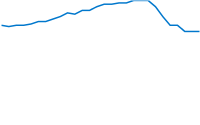 By middle of December 2008, Rock Solid was back to IPO levels. Iqbal heaved a sigh of relief and started offloading tranches of Rock Solid. The technical traders joined in the party. In a matter of two weeks, before the cowboys could even blink, Rock Solid was back to rock bottom levels. Iqbal's boss was happy that he had managed to save the profitability of his account. Iqbal inducted Anthony into his team. Jatin Metha of Rock Solid thanked Iqbal for RoI's support during difficult times. Retail investors who were gullible enough to believe the recommendations were left carrying the Rock Solid can. They posted messages like the following on market watch websites:
"I bought Rock Solid in November but it has fallen since then. Do you think it is a good buy-and-hold stock for the long term?"
RoI was a media conglomerate. Its eponymic daily newspaper ('Reports of India') enjoyed a massive circulation. It had significant ability to shape the opinions of India's upwardly mobile aspiring class. No serious advertising campaign was complete without buying ad space and/or time at RoI. However, with the explosion in new media and media businesses, the supply of media inventory had shot up. As a consequence, even premium brands like RoI were under pricing pressure. To counter this and to leverage their position in the market, clever minds at the helm of RoI had devised a new line of business. It was called private pacts. Instead of parting with hard cash, a pre-IPO company like Rock Solid could sell a small stake to RoI in return for assured media coverage in the form of advertisements and other corporate branding services. Upon successful IPO, RoI was free to sell its stake in the open market thereby making a decent pile for itself. Depending on RoI's ability to pump up market sentiment in favour of the IPO, it could end up making much more than what would have by charging for the pre-IPO advertising.
Jatin was cautiously optimistic on hearing Piyush's explanation of private pacts. "What do you mean by corporate branding services?", he asked, "Surely, they won't give us editorial coverage, will they?". "It is all handled very subtly", replied Piyush in a soft tone and went on to explain a modern day avatar of subliminal advertising. "Any blatant editorial coverage will be gleefully seized upon by RoI's competitors waiting to tarnish its image. So they'll do the occasional advertorial in the main newspaper. But that is routine. Here is the subtle part. They will feature your interview in their real estate supplement. They'll call you for comments on market trends and start name dropping Rock Solid. Imagine a potential IPO time investor reading a real estate supplement article about demand for premium housing in one of the localties where we have a project. The article might say 'Reputed developers like Rock Solid report full bookings within a week of opening.' You can't get that kind of credibility through advertisements. Besides RoI has the right incentive in place to do this right. They typically try to book profits within a year of the IPO." Jatin nodded slowly.
After a couple of months of negotiations, a deal between Rock Solid and RoI was in place. For a seven per cent stake, RoI would promote Rock Solid across all its channels. Rock Solid was to go in for an IPO within eighteen months and RoI had the option to sell its stake any time after the IPO. The coverage began, first a trickle and then a steady stream. On the RoI group owned FM station, during a music show, one would hear a DJ have this one time scripted conversation with a staged caller. "Hi Rakesh, where do you live?". A fake Rakesh would reply "Patagonia Heights". DJ exclaims "Wow you mean the one by Rock Solid constructions? You must be a rich guy. What can I play for you?" On the RoI media website you might stumble upon a reader poll that asked, "If there was one thing that would make a big positive difference to your life, it would be: (a) Own a Ferrari (b) Own a posh Rock Solid home (c) Spend a day with your favourity celebrity". Bull's Hit, RoI's business supplement would say in the middle of an article talking about property prices, "Jatin Mehta, the astute CEO of rising star Rock Solid Ltd. says there is no near or medium term price stagnation in sight for residential for commercial properties." You get the drift. Retail and institutional investors were being steadily informed about the virtues of Rock Solid Ltd.Rock Solid Ltd. went public in a year. The issue was oversubscribed four times even though the stock was priced at a premium. It seemed like a win=win pact between two business executed to perfection. It was time for RoI to offload its stake and realize a well deserved return on investment. Except for a chance cafeteria conversation between Iqbal Dalvi, the RoI account head for Rock Solid and a stock analyst, Anthoy Dias. Anthony wrote stock recommendations in Bull's Hit. He had been tracking Rock Solid for a while. Iqbal asked Anthony if he thought Rock Solid had peaked. If so, it would be a good time to book profits. Iqbal replied, "Oh no, sir. Rock Solid is just experiencing some temporary resistance at current levels. I'll bet ten thousand bucks that this stock is going to almost double in six to eight months." Startled by this reply, Iqbal asked Anthony to make a formal presentation on the matter. Anthony knew that he was sitting on a potential jackpot. If he could convince Iqbal of his analysis and the company made a much bigger profit selling later, he was sure to get a much better job with the private pacts team. No more mind numbing research and churning out stock recommendations. And he was quite sure of his analysis. He marshaled all the facts at hand into a compelling presentation. "Good work Anthony", said a convinced Iqbal, "I'll hold out for six months. If it goes as you forecast, you might find a place in my team."
This was June 2008. By end of August, Rock Solid had gained nearly seventy per cent over its IPO offer price. It looked like even Anthony's bold forecast had been conservative. Iqbal decided to sell Rock Solid in a month's time. Then came the news of the shenanigans of certain investment banks in the United States. Rock Solid lost its momentum and dipped ten per cent. Iqbal and Anthony concurred that it was a temporary blip and the Indian market would resume its rise during the festive season. However, the bottom fell out of the market by end of October. Rock Solid was now trading at a 20 percent discount to IPO levels. Iqbal came under fire for the decision to hold on to Rock Solid. He had to do quick damage control. His bonuses were linked to the profit he could deliver out of his accounts. Iqbal decided that it was time to inform the retail investor about bargain deals. He summoned Anthony.
"You know how your forecast about Rock Solid has turned out."
"But Sir, who could have expected this madness on Wall Street?"
"Ok, are you still willing to stand by your analysis that Rock Solid is fundamentally a great stock?"
"Yes Sir. Absolutely."
"Great. Then you should have no qualms doing this. I want you to advise a strong buy on Rock Solid. You will do this on Bull's Hit every alternate week for six weeks."
"But Sir, three recommendations in six weeks is unheard of. Besides, from a retail investor's point of view, there are other stocks that are much more attractive right now."
"Anthony, you got us into this mess. Don't whine about doing a little clean up. After all, I am only asking you to inform our readers that Rock Solid is a must buy at current levels. Don't you agree that Rock Solid is undervalued right now? One more thing, that vacancy in my team may go away soon. I have to go now. Talk to you in six weeks."
As the recommendations began appearing, retail interest started picking up. Most retail investors have a herd mentality. They buy when the market is on the rise and sell when it tanks. But there are quite a few cowboys with enough money in hand to indulge in bottom fishing based on recommendations in the media and other hearsay. These cowboys started picking up Rock Solid. Their actions created minor ripples on the radars of technical traders. These canny traders soon realized what was happening - the Bull's Hit recommendations weren't hard to miss. They sensed that a big mover was playing games. They sensed that there would a steady stream of retail purchases and a sudden bunch of huge sales. They knew they could make money in Rock Solid by buying now and selling as soon as they saw the first installment of big sales. Seeing the momentum, a few unsuspecting sectoral mutual fund managers decided to go a little overweight on Rock Solid.
By middle of December 2008, Rock Solid was back to IPO levels. Iqbal heaved a sigh of relief and started offloading tranches of Rock Solid. The technical traders joined in the party. In a matter of two weeks, before the cowboys could even blink, Rock Solid was back to rock bottom levels. Iqbal's boss was happy that he had managed to save the profitability of his account. Iqbal inducted Anthony into his team. Jatin Metha of Rock Solid thanked Iqbal for RoI's support during difficult times. Retail investors who were gullible enough to believe the recommendations were left carrying the Rock Solid can. They posted messages like the following on market watch websites:"I bought Rock Solid in November but it has fallen since then. Do you think it is a good buy-and-hold stock for the long term?"
written on: Thursday, August 13, 2025 permalink
note: This is a work of fiction. All names and characters are fictional.

This work is licensed under a specific Creative Commons License.

Post a Comment